
We may earn a small commission when you purchase through our links—at no extra cost to you. It helps us keep creating no-nonsense gear guides for the men and women of the working class.
Our Picks:
- Carhartt Rigby Bib Overall – Best Overall
- DuluthFlex Fire Hose Bib Overalls – Best for Storage and Kneeling
- Dickies Classic Bib Overalls – Best Budget
- Dickies Duck Insulated Bib Overalls – Best Cold-Weather Value
- RefrigiWear Iron-Tuff Bib Overalls – Best for Extreme Cold and Freezers
- Red Kap Twill Action Back Coverall – Best for Mechanics and Shop Work
- Dickies FLEX Cooling Long Sleeve Coveralls – Best Warm Weather Coveralls
For most construction, maintenance and outdoor work, the Carhartt Rigby Bib Overall is our best overall pick. Its midweight stretch canvas is easier to move in than stiff traditional duck, while the double-layer knees and useful pockets still feel heavy duty enough for work. The Dickies Classic Bib Overall is the straightforward value option. Mechanics and shop workers who need full-body coverage should start with the Red Kap Twill Action Back Coverall.
How We Chose:
We compared current manufacturer specifications for fabric, mobility, reinforcement, pockets, knee construction, insulation, closures and care. We also made sure the list covers several kinds of jobs instead of ranking seven versions of the same heavy duck bib.
The 7 Job-Ready Picks:
Best Overall
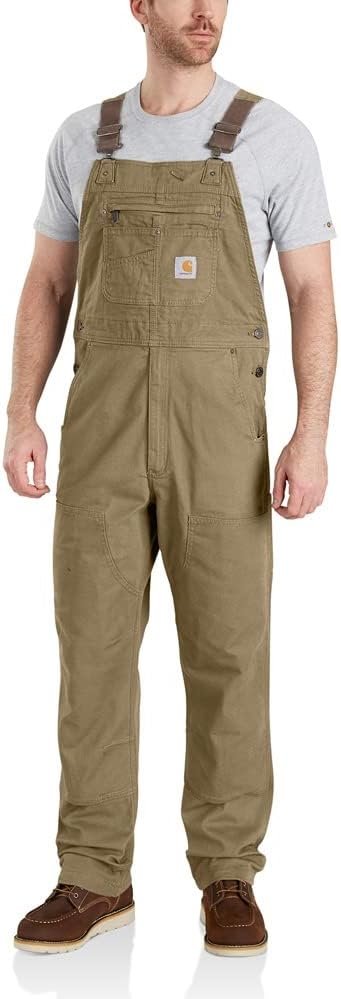
Carhartt Rigby Bib Overall
Quick verdict: The Rigby is the easiest all-around recommendation for workers who want the coverage and storage of a bib without the stiff break-in period of heavyweight duck.
Key specifications
- 8 oz. canvas made from 98% cotton and 2% spandex
- Rugged Flex stretch technology
- Adjustable elastic suspenders and zip fly
- Multi-compartment bib pocket with zip closure
- Double-layer knees with knee-pad and cleanout openings
- Triple-stitched main seams and reinforced stress points
The Rigby works because it hits the middle. The canvas has enough substance for everyday construction and maintenance, but the small amount of stretch helps when climbing ladders, stepping into equipment or working from a crouch. It is not as armor-like as heavyweight firm duck, and that is the point: most workers will find it easier to wear through a full shift.
The double knees accept compatible knee pads and include cleanout openings. That setup is useful for trim carpenters, flooring crews, electricians and anyone who kneels often but does not want strap-on pads behind the knee. The bib pocket, lower-front ledge pockets, phone pocket and hammer loop cover common tools without turning the front into a bulky organizer.
The tradeoff is that an 8-ounce stretch canvas will not be the first choice for constant sparks, sharp scrap or extreme abrasion. It is also uninsulated. Treat it as a three-season general-purpose bib and add proper layers or hazard-rated clothing when the work demands more.
Best for: General construction, carpentry, maintenance, equipment operation and active outdoor work.
Best for Storage & Kneeling
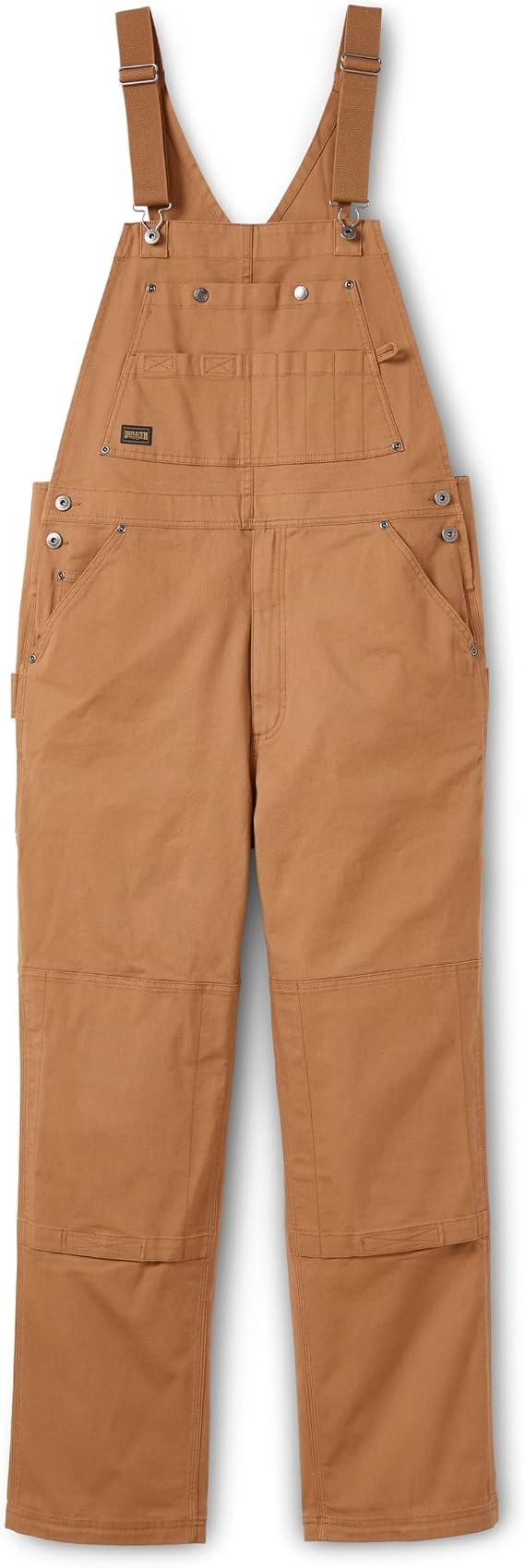
DuluthFlex Fire Hose Bib Overalls
Quick verdict: Pick the DuluthFlex bib when kneeling, carrying small tools and reaching all day matter more than keeping the design stripped down.
Key specifications
- 8 oz. cotton canvas with 3% spandex
- DuluthFlex stretch and a Crouch Gusset
- FendOff treatment for water and stain resistance
- 10 pockets and two utility loops
- Double knees with built-in kneepad pockets
- Adjustable shoulder straps and side tabs
This is the storage-heavy option in the group. Ten pockets give fasteners, a tape, marker, phone and smaller tools a home, while two utility loops handle items that do not sit well in a pocket. The gusset and stretch fabric help keep that storage from fighting you when you squat or climb.
Duluth adds a water- and stain-repellent finish. That can help with damp lumber, muddy knees and everyday spills, but it does not turn the bib into rain gear. The double knees are the more important work feature. Add compatible pads for flooring, concrete layout, low-voltage work or long stretches on unfinished surfaces.
All that storage can become a downside if every pocket gets loaded. Extra weight on the front of a bib pulls on the shoulder straps and can make crawling awkward. Use the pockets deliberately and keep heavy hand tools on a proper belt or pouch when that is the safer setup.
Best for: Carpenters, installers, remodelers and workers who regularly carry small tools and kneel.
Best Budget
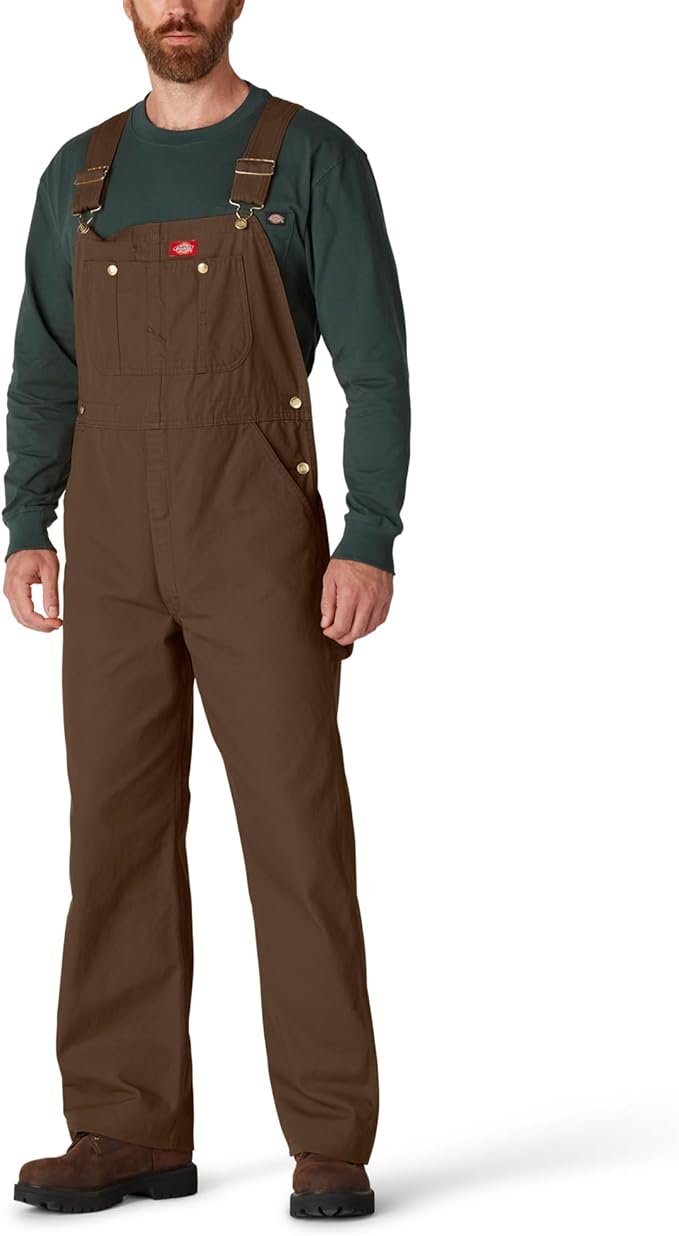
Dickies Classic Bib Overalls
Quick verdict: The Dickies Classic is the no-frills choice for workers who want traditional cotton bibs, a roomy fit and a lower entry price.
Key specifications
- Cotton duck or cotton denim versions
- Approximately 11.5 oz. duck or 11.75 oz. denim
- Generous universal fit
- High crossover back
- Legs designed to fit over work boots
- Traditional bib and utility-pocket layout
The Classic keeps the formula familiar: substantial cotton fabric, a high back, adjustable straps and enough leg room to go over boots. It makes sense for yard work, farm chores, shop projects and general labor where you need coverage but do not need stretch panels, insulation or a specialized pocket system.
The heavier cotton will usually feel stiffer at first than the stretch-canvas picks above. It can also hold sweat and dry slowly after getting soaked. On the other hand, workers who prefer a traditional bib often like the uncomplicated fabric and roomy shape.
Check whether the listing is duck or denim before buying because the feel and look differ. Also measure for the clothes you expect to wear underneath. A bib that fits perfectly over a T-shirt may bind at the waist and thighs when it is pulled over winter layers.
Best for: General labor, farm and yard work, home shops and buyers who want a basic traditional bib.get-conscious buyers.
Best Cold Weather Value
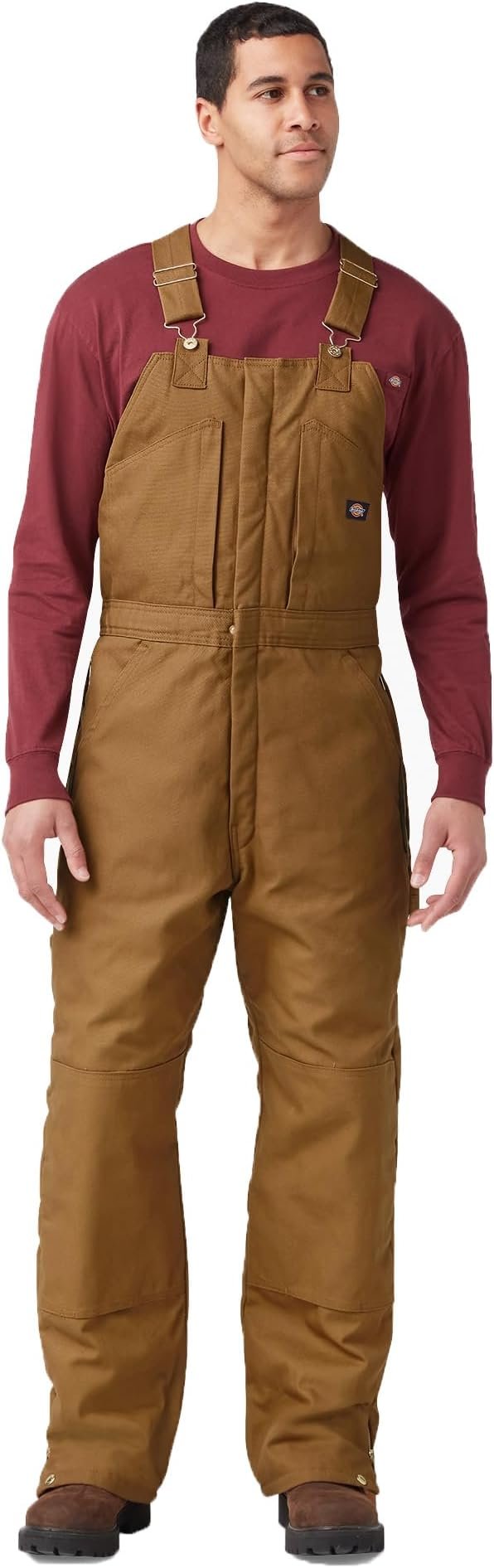
Dickies Duck Insulated Bib Overalls
Quick verdict: These insulated Dickies bibs cover the cold-weather basics without moving into specialized freezer-gear pricing.
Key specifications
- Cotton duck shell with a durable water-repellent finish
- Quilted polyester and nylon lining
- Double-layer knees
- Leg zippers that extend to the waist
- Adjustable elastic suspenders
- Snap-adjustable hems
The biggest advantage is easy on and off. Zippers that run to the waist make it much less frustrating to pull the bibs over work boots, and they let you open the lower legs when moving between the truck, shop and cold outdoors. The water-repellent finish helps snow and light moisture bead up, though the garment is not a substitute for waterproof rainwear.
The quilted lining adds warmth without turning the bib into extreme-cold equipment. That makes it a practical value for snow removal, outdoor maintenance, farm work and early starts in an unheated building. Double knees add durability in a common wear zone.
Insulated bibs should leave enough room for a base layer without hanging so loose that straps, hems or excess fabric create a snag problem. Current size and color availability can vary, so use the live Dickies listing rather than assuming every combination is stocked.
Best for: Snow removal, winter maintenance, farm work and outdoor jobs in ordinary cold conditions.
Best For Extreme Cold & Freezers
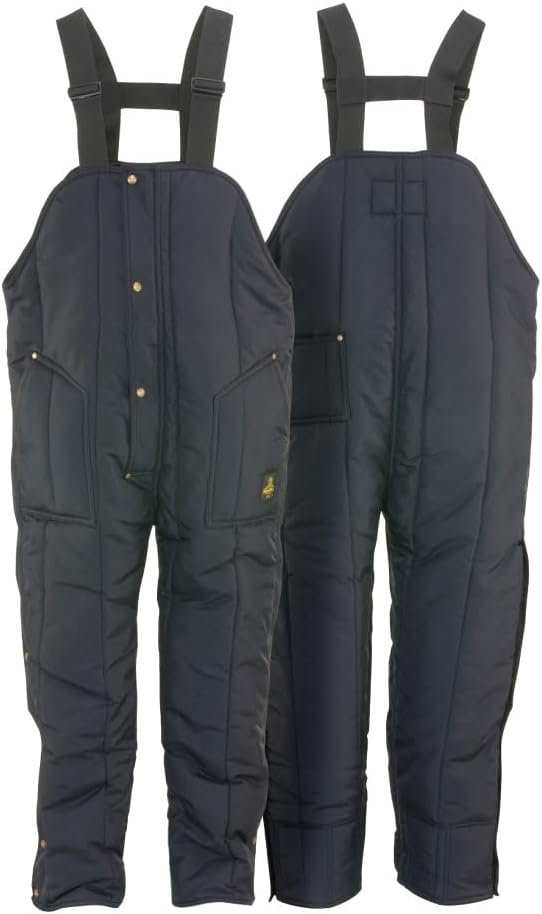
RefrigiWear Iron-Tuff Bib Overalls
Quick verdict: The Iron-Tuff is specialized cold-weather gear for freezer, cold-storage and severe-winter work—not an everyday insulated bib.
Key specifications
- 400-denier nylon outer shell
- 11.25 oz. RefrigiFill insulation
- Water-repellent and wind-tight construction
- Manufacturer comfort rating to -50°F
- High front and back with 2-inch adjustable suspenders
- Thigh-high leg zippers and reinforced heels
RefrigiWear builds the Iron-Tuff around long exposure to serious cold. The high bib, heavy insulation and wind-tight shell provide more coverage than ordinary quilt-lined duck. Thigh-high zippers help when stepping in over large insulated boots, and reinforced heels address one of the first areas to wear when hems drag.
The listed -50°F comfort rating is a manufacturer rating, not a promise that every worker will be comfortable or protected at that temperature. Cold stress depends on wind, moisture, workload, exposure time, health, the rest of the clothing system and the jobsite plan. Employers should select cold-weather PPE and work practices for the actual conditions.
This level of insulation is bulky. It is the wrong choice for a worker who repeatedly moves between a freezer and a warm loading area or performs high-output labor without a way to manage sweat. Buy it when the exposure justifies it, not simply because it is the warmest product on the list.
Best for: Commercial freezers, cold storage, winter loading yards and prolonged work in severe cold.
Best For Mechanics & Shop Work
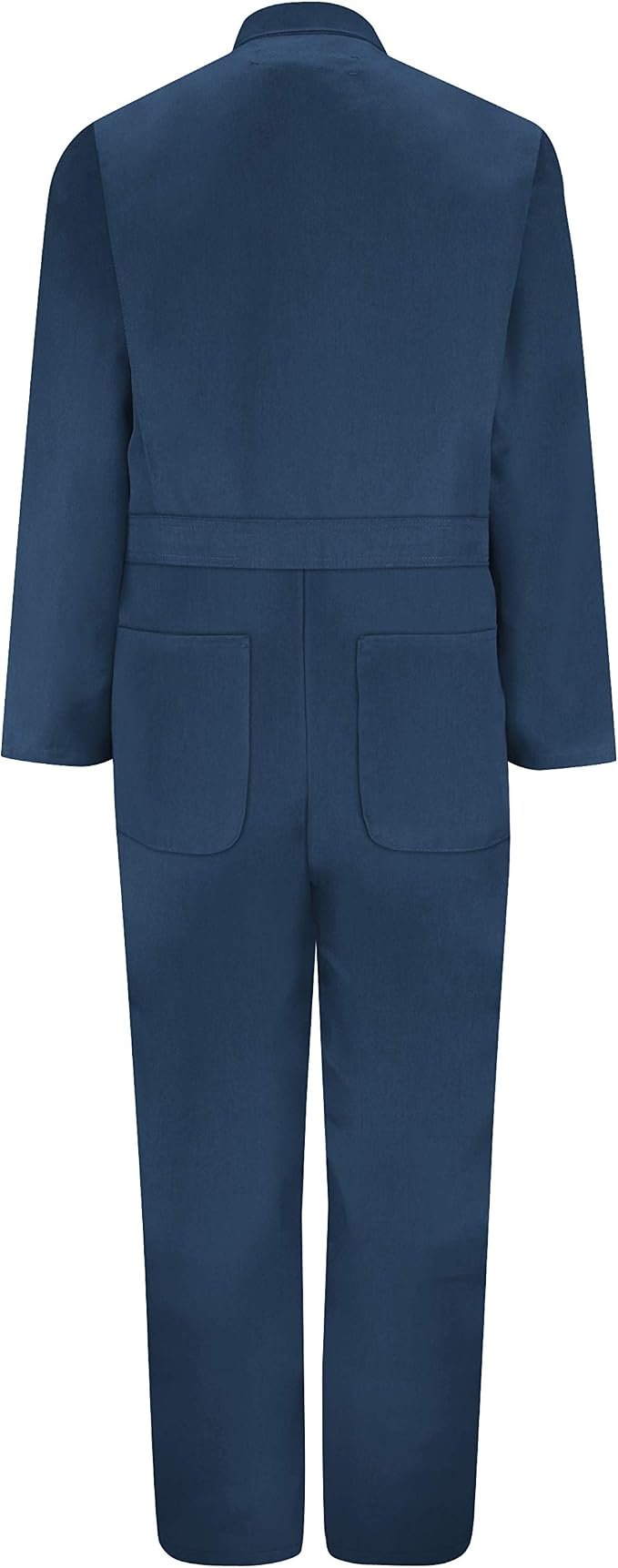
Red Kap Twill Action Back Coverall
Quick verdict: The Red Kap is a practical shop coverall that protects the clothes underneath without the weight of heavy cotton duck.
Key specifications
- 7.25 oz. poly-cotton twill
- Oversized design intended to fit over clothes
- Action-back pleats for reach
- Front brass zipper with gripper closure
- Chest, front, hip and rule pockets
- Wrinkle-resistant workwear fabric
Mechanics, maintenance technicians and facilities crews need reach more than heavy insulation. The action back opens as your arms move forward, which helps when leaning into an engine bay, reaching into a cabinet or working overhead. The lighter twill is also easier to wear in a shop than a heavy duck coverall.
The pocket layout gives you places for a gauge, marker, small driver or folded notes, while full-body coverage keeps grease and dust away from a uniform or street clothes. Because the design is meant to be worn over clothing, the published garment size may feel larger than a normal shirt-and-pants fit.
This is ordinary workwear, not welding PPE, chemical protective clothing or an arc-rated garment. A full-coverage shape does not create a safety rating. Match the coverall to the identified hazard and use the required protective equipment over or instead of it.
Best for: Mechanics, plant maintenance, facilities work, painting prep and general shop cleanup.
Best Warm Weather Coverall
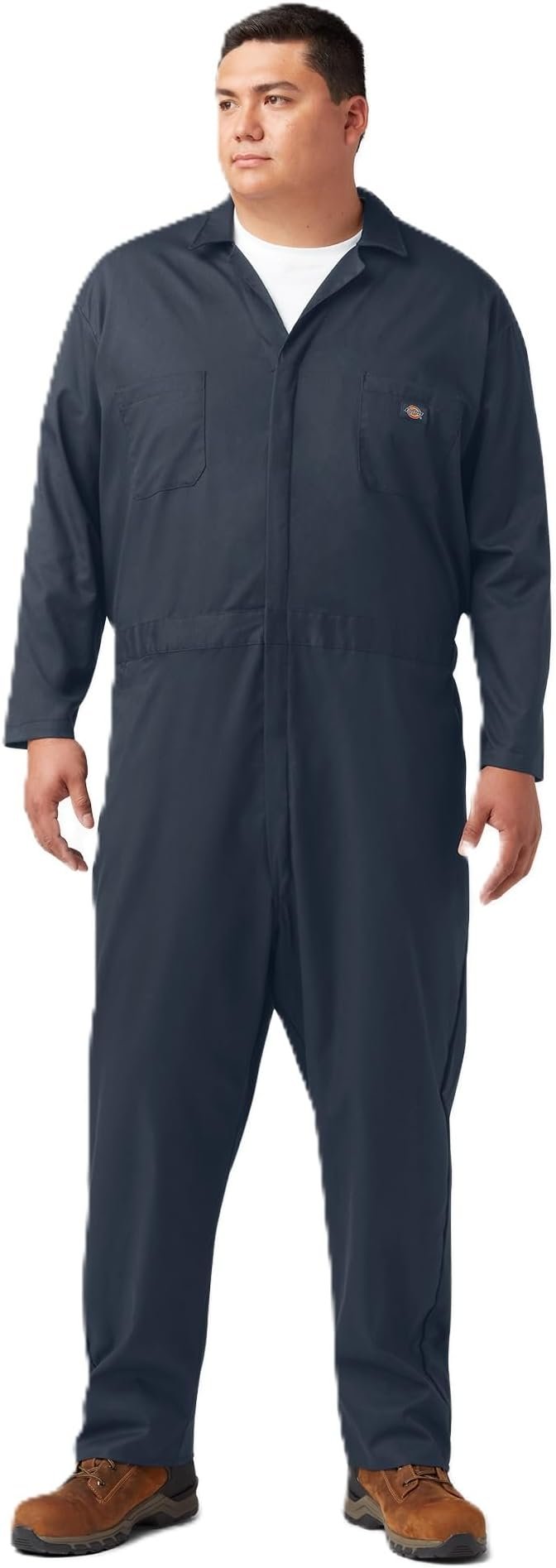
Dickies FLEX Long Sleeve Coveralls
Quick verdict: This is the better coverall when heat and restricted movement are bigger problems than cold, sparks or heavy abrasion.
Key specifications
- Temp-iQ cooling and moisture-wicking technology
- FLEX fabric for easier movement
- Bi-swing back
- Elastic waist inserts
- Two-way front zipper
- Concealed snaps at the closure
Coveralls naturally trap more heat than separate pants and a shirt. Dickies addresses that problem with moisture management, stretch and a bi-swing back. The two-way zipper also makes the one-piece design easier to live with through a full shift.
This model makes the most sense for indoor maintenance, auto detailing, assembly, light shop work and warm facilities where clothing protection is useful but a heavy shell would be miserable. Elastic waist inserts help the garment follow the body rather than hanging like a straight tube.
Cooling and wicking features improve comfort; they do not make a hot workplace safe by themselves. Hydration, breaks, airflow, acclimatization and the employer’s heat plan still matter. This garment is also not a substitute for FR, welding or chemical-rated protective clothing.
Best for: Warm shops, detailing, light maintenance, assembly and indoor service work.
How to Choose Bib Overalls and Coveralls:
Start With the Kind of Coverage You Need
Bibs protect the legs, waist and front of the torso while keeping the arms open. Coveralls protect the arms and back as well. If the job mostly wears out knees and pants, bibs usually give better comfort. If dust, grease or paint ends up everywhere, coveralls earn their extra coverage.
Leave Room for Movement and Layers
Do not size only from your jeans. Measure over the clothes you plan to wear, then compare those measurements with the manufacturer’s chart. Squat, reach overhead and climb a step before removing the tags. Shoulder straps should not pull when kneeling, and the crotch should not hang low enough to snag.
Match Fabric Weight to the Work
Heavy duck resists abrasion and blocks more wind, but it is hot and slow to dry. Midweight stretch canvas is easier for active work. Poly-cotton twill works well indoors and generally releases wrinkles more easily. Insulation should be chosen for the exposure, not simply because winter is on the calendar.
Look at the Knees, Zippers and Pocket Placement
Double knees matter if you kneel or crawl. Long leg zippers matter if you put insulated bibs on over boots. Pockets should be reachable with gloves and should not sit directly under a harness, belt or seat restraint. More pockets are only useful when they do not interfere with the rest of your gear.
Never Assume Full Coverage Means Protective Clothing
Ordinary cotton or poly-cotton coveralls can protect the clothes beneath them from dirt, but that does not make them flame resistant, arc rated, chemical resistant or suitable for welding. The employer’s hazard assessment and PPE program should determine the protective garment and rating required for the task.
Final Verdict:
The Carhartt Rigby Bib Overall is the strongest all-around choice because it combines practical knee protection, useful storage and enough stretch for active work. Choose the DuluthFlex Fire Hose Bib if pockets and kneepad use matter most, or the Dickies Classic if you want a simpler value option.
For shop coverage, the Red Kap Twill Action Back Coverall is the most practical general-purpose pick. Step up to the Dickies Duck Insulated Bib for ordinary winter work or the RefrigiWear Iron-Tuff when the job involves prolonged, severe cold. The goal is not to buy the toughest-looking garment—it is to buy the coverage, mobility and insulation your work actually requires.
Best Overall